

The Bible talks about not being unequally yoked and many people take that as a sign to assign blame when there may not be anything wrong with either party. Actually the yoking may involve more understanding of the different money approaches each partner brings to the relationship. If we know and understand in the beginning those differences then measures can be taken to avoid many of the pitfalls.
The following are four issues that you should discuss with your partner to understand their relationship to money:
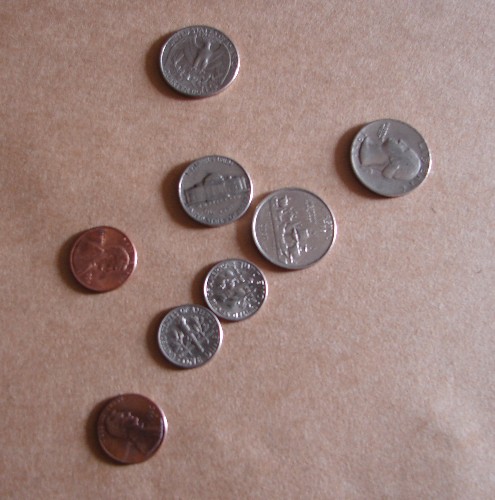
When you look back over your history, how did you see your parents deal with money, and how did that affect your money behavior? In my personal history my parents never seemed to have enough of it (I grew up in a large family which can be expensive) and as a result I tend to be frugal to avoid some of the traps they encountered. Because so many of our money behaviors are learned, it is a good exercise to simply ask your partner what are some of their earliest money memories. This is a lot less threatening and probably will get a more truthful response than a direct question of “how do you deal with money?”
As you gaze into the eyes of your partner, one never thinks about how much you would have to have in order to feel well off or comfortable. For example one partner may be willing to drive an older car with no car payments to have more money in the bank. Another may take pleasure in driving an expensive car, despite huge monthly payments, because he felt deprived growing up in a family that always had an old beat up car. How much is enough for you in your day-to-day life is something you need to discuss to understand how your partner views the issue. A good way to start the conversation is to ask “What would tell you that you had enough?”, or “What would you have to have to make you feel good about yourself?”
Money means control:
Although it may never be voiced, most people understand that money is control. I have two friends who could never resolve the issue of who pays the bills every month and thus who controls the money in the relationship. I think they effectively dealt with the issue by sitting down and deciding who would pay which bills and then setting up a third checking account that each would place the funds for their assigned bill. In this way once their individual obligation had been satisfied they retained control over any remaining funds and tended to butt heads less often over their spending habits.
 Easy payments and credit:
I have another friend who always seems to fall victim to the draw of “easy payments” without regard to how much she is paying. What she always seems to forget is that after you have several easy monthly payments they are not so easy any more and it begins to affect your credit rating. Asking your partner to request a copy of their credit report is very instructive because it provides a hard history of how they have handled credit or money in the past. This is a very important point because denial is a strong force and even the poorest money manager will answer that they are good with a dollar. Having a hard copy history is difficult to gloss over and provides an effective measure of understanding the traps to which they are prone to fall victim.
These are just some of the areas I discuss during the workshop but provides a short list of things you may want to go over to understand the person you want to share your life with. If you understand their thinking and therefore their behavior you can negotiate effective measures that can make certain money is not the spark that blows up the relationship!
As far as money, I was raised w/the adage: "If it isn't broke, don't fix it'…. In other words, if u truly don't need it, don't buy it… I've instilled that in my kids… My bf however is an impulse buyer, satisfy the moment… I've witnessed how he has spent his money- NOT mine…lol.. and I even point it out to him and ask 'why?'… invariably he will have an excuse, one that i know suffices for him but for me, I don't see the logic of his reason… You are right, money is control and power… Its also a destroyer… Money issue has come between us and he knows me well enough not to push the issue and that I will do what I want whether he agrees to it.. and I realize he will do the same… and I am smart enough not to mix my money in w/his… it makes life easier for both…because in the end he and I both have to live w/the decisions we make…
You sure give your patients/students good advice !
It reminds me of two things :
1. “No one can serve two masters. Either he will hate the one and love the other, or he will be
devoted to the one and despise the other. You cannot serve both God and Money.” (Mat., 6 : 24)
2. My English teacher used to tell us :
Bees are always busy. Their motto is : time is honey. (Lol)
How can a loving couple share love and not share money ? I wonder…
Chrissy,
You make a good point and your boyfriend is a good candidate to, in a quiet moment, ask what was one of his earliest experiences dealing with money. You might be surprised at the response.
JLBO,
You also make a very good point "How can a couple share love and not share money?" And that is the trick that is so difficult to learn. It is all about learning how your partner views money and then coming to some agreement in terms of how that view can be integrated into the relationship.
A good case in point, a female in one of the sessions added her new husband on to her cell phone account and gave him a phone. He talked all the time on it and ran up a bill over $1000 in overage charges. The fact he did not have a cell phone when she met him should have spoke volumes. A better approach would have been to have given him a cell phone with a set limit he could add to so he would have been happy and she could feel good about including him.
hello… hapi blogging… have a nice day! just visiting here….
Truly, we don't usualy talk about money with our boyfriend o girlfriend. We always think that isn't "romantic" perhaps. But it's a very important thing for everyone, and, of course, more for the couple.
Thank you for making me. A kiss
Ana,
I hope I have presented approaches that will make having that talk a little easier. Man or woman once we understand how our partner thinks then we can plan ways to deal with their approach within the relationship that is healthy. Money is a mine field and if not tackled early on can do what mine fields always do… blow up!
Oh, I know of his experience w/money. His problem is that he gets caught up in the moment and he doesn't listen to rational reasons as to why he shouldn't spend… I think his issue is getting that self gratification feeling… he kicks himself later on for what he has done… Right now he is learning his lesson the hard way.. I've come to realize that he has to be the one to want to fix this, no one especially me can change his mind.
I was mean: "Thank you for making me think" … puf, sorry.
Thanks, Cherrie, I agree with you.